

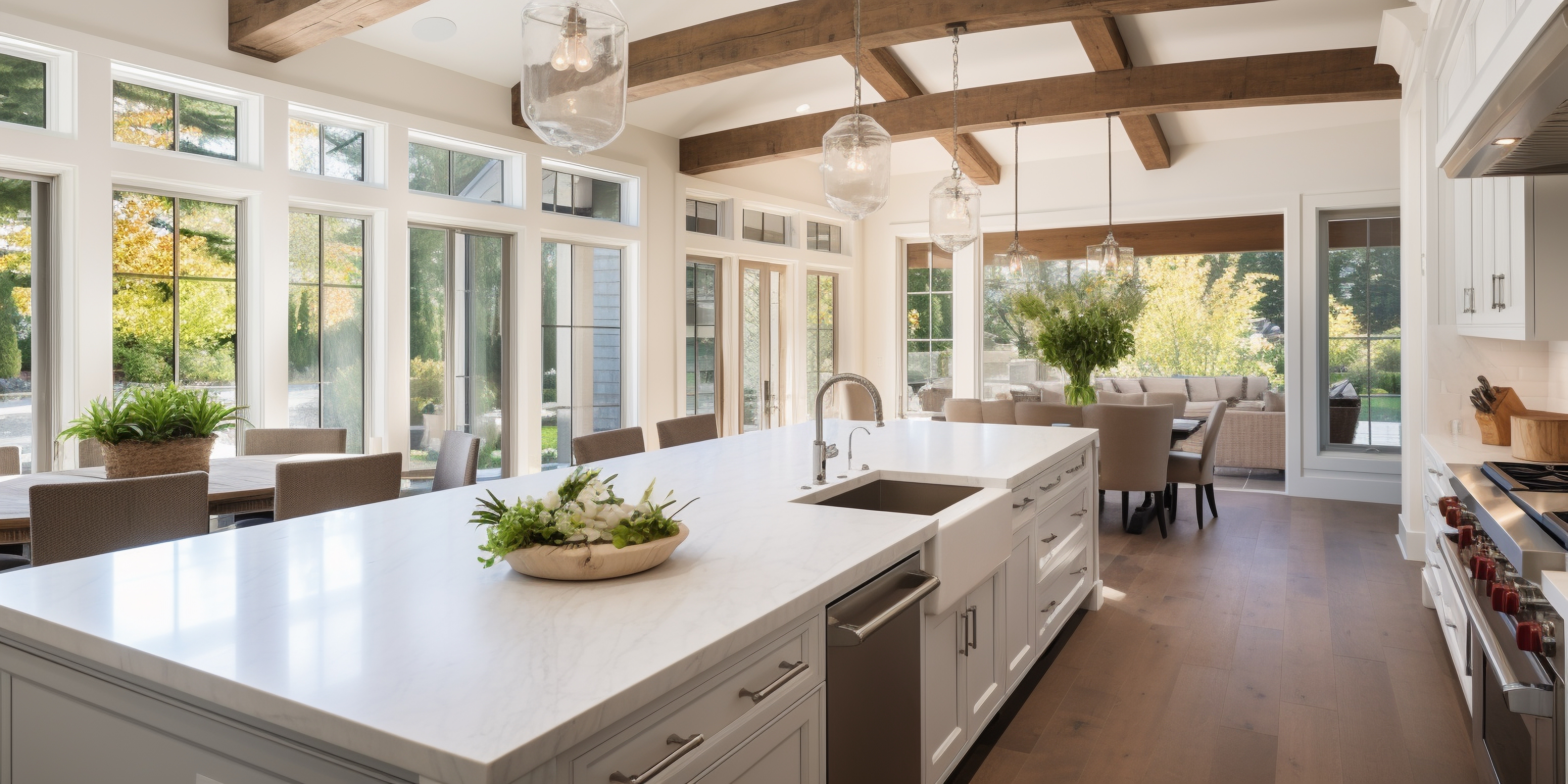
Countertop thickness can seem like a small design detail, but it has a noticeable effect on the finished kitchen. The thickness of the slab influences the visual weight of the countertop, how the edge looks, and how well the surface coordinates with your cabinets and overall design.
There is no single thickness that works for every kitchen. Your material, cabinet layout, preferred edge profile, design style, and practical needs should all be considered before countertop installation. Understanding these factors can help you choose a countertop that looks intentional rather than simply selecting the first standard option.
Standard Thickness Is a Practical Starting Point
Many countertop materials are available in standard thicknesses, making them a practical starting point for kitchen planning. The appropriate option depends on the specific material and fabrication method, so your installer or fabricator can explain what is available for your chosen surface.
A standard thickness can provide a clean, proportionate appearance without drawing too much attention to the edge. This works especially well when you want the cabinets, backsplash, or countertop pattern to remain the primary visual focus.
It can also be a sensible choice when the existing kitchen has standard cabinet dimensions and you want a straightforward remodeling approach. The goal is to make the countertop work naturally with the rest of the room.
Thicker Edges Create More Visual Weight
A thicker-looking countertop edge can give an island or peninsula a substantial, furniture-like appearance. This is often achieved through fabrication techniques rather than simply using an extremely thick slab.
The effect can be particularly attractive on large islands where the countertop has enough visual space to support a stronger edge. It may also help create a more substantial transition between the countertop and the cabinetry below.
However, a heavy edge is not automatically better. In a smaller kitchen, too much visual weight can make the countertop feel oversized. Proportion matters, especially when you are balancing the surface with cabinet height, backsplash design, appliances, and surrounding floor space.
Consider the Countertop Material
Thickness choices can vary according to the material you select. Different countertop materials have different structural properties, fabrication requirements, and available slab dimensions.
This is one reason it helps to choose the material before finalizing the countertop thickness. Quartz, granite, and other surfaces may have different recommendations for fabrication, seams, overhangs, and edge treatments.
Your countertop installer can also help you understand how thickness interacts with areas such as sinks, cooktops, corners, and unsupported overhangs. These details are important because countertop design is both visual and structural.
Let Your Kitchen Style Guide the Proportion
Modern kitchens often benefit from clean, simple edges that reinforce a streamlined design. More traditional kitchens may accommodate a heavier profile or a more decorative edge. Your cabinets should be part of the conversation, too. If you have detailed cabinet doors and decorative hardware, a very heavy countertop edge may compete for attention.
With simple, flat-panel cabinetry, a stronger countertop profile can become a useful focal point. The same principle applies to islands. Because an island is often the visual center of the kitchen, its countertop thickness and edge profile deserve careful consideration rather than being treated as an afterthought.
Plan Thickness Before Installation Begins
Countertop thickness is easiest to evaluate before fabrication and installation are underway. Once the cabinets, appliances, sinks, and other elements are being coordinated, small decisions can have a noticeable effect on the finished result.
At Jodi's Cabinet Sales, homeowners can discuss countertop options with their kitchen's layout and overall design in mind. Whether your project is in Clarksville, TN or one of our Paris, Dickson, Springfield, and Pleasant View, TN, planning the details early can help create a more cohesive finished space.
Get the Countertop Details Right From the Start
Choosing countertop thickness is really about proportion, material, function, and design working together. A standard profile may provide the clean look you want, while a thicker-looking edge can add visual substance to an island or other focal point. The best choice depends on the entire kitchen rather than the countertop alone.
If you are comparing materials or preparing for countertop installation, Jodi's Cabinet Sales can help you work through the options and understand how thickness, edges, and layout fit together. For homeowners in Clarksville, TN and nearby Paris, Dickson, Springfield, and Pleasant View, TN, contact us today to discuss your kitchen plans. You can also visit our showroom to see countertop and cabinet combinations in person and get a better sense of the proportions, finishes, and details that will work best in your space.


